




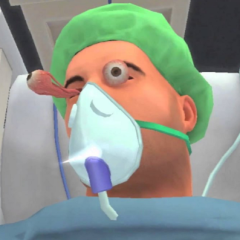




Sorry Bob is a physics-based surgery simulation game where the player takes the role of an unqualified doctor attempting to complete medical procedures. The objective is to keep the patient alive while performing specific tasks such as removing and replacing organs. The gameplay takes place from a first-person perspective, with the player controlling a single hand. Movements are intentionally unstable, making even simple actions difficult to execute. The game structure focuses on completing objectives under time pressure while managing factors such as blood loss and positioning.
Control System And Hand Mechanics
The main mechanic is based on controlling individual finger movements and hand positioning. Each finger can be activated separately, which creates a complex control system that requires coordination. The player must grab tools, move them carefully, and interact with objects inside the patient’s body. The difficulty does not come from understanding objectives but from executing them correctly due to unstable physics.
Small errors can cause tools to slip or damage the patient, increasing blood loss and leading to failure. The player must constantly adjust hand position and apply controlled movements to avoid unintended actions. This creates a system where precision is limited, and adaptation becomes necessary during each attempt.
Objectives And Gameplay Tasks
Each level presents a clear task, usually related to a medical procedure. The player must identify the correct organ, remove damaged parts, and place replacements before the patient’s condition deteriorates.
- locate and identify the required organ
- remove existing organs without excessive damage
- manage blood loss during the operation
- place the correct replacement before failure
These tasks form a structured loop where execution determines success rather than planning alone. The same objectives become more challenging due to control difficulty.
Progression And Player Adaptation
Progression is based on completing procedures and improving control over time. The game does not rely heavily on upgrades but instead focuses on skill development. Repeated attempts allow players to better understand hand movement and tool behavior.
From a strategic perspective, the player must slow down actions and avoid unnecessary movements. Quick or aggressive input often leads to mistakes, while careful positioning increases the chance of success. Managing time and patient condition simultaneously becomes a key part of gameplay.