




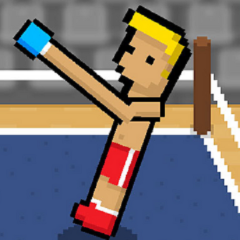



Boxing Random is an arcade fighting game built around simplified controls and unpredictable movement. The player controls a boxer using a single input that triggers both motion and attack actions. Matches are played in short rounds, and the objective is to score points by knocking down the opponent. The outcome of each round depends on timing and how well the player adapts to changing conditions.
Round System and Match Flow
Each match is divided into a series of rounds where both fighters reset after a point is scored. The player competes either against an AI-controlled opponent or another player locally. A fixed number of points is required to win the match, which keeps sessions short and repeatable.
The pace is consistent, but each round may feel different due to variations in movement and environment. This prevents the gameplay from becoming repetitive.
Control Mechanics and Input
Boxing Random uses a minimal control system where a single button manages all actions. Pressing the button causes the character to jump forward and attempt a punch. The movement is influenced by physics, which makes each action slightly different.
Typical gameplay actions include:
- Pressing a button to attack and move simultaneously
- Timing inputs to connect with the opponent
- Adjusting rhythm based on opponent behavior
- Maintaining balance after each action
- Reacting quickly to unexpected outcomes
These mechanics remain consistent throughout the game.
Randomization and Environmental Changes
After each round, the game may introduce changes that affect how the next round plays out. These can include different arenas, altered gravity, or changes in character appearance that influence hit detection. The player must adapt to these variations without relying on a fixed strategy.
The unpredictability of movement and environment requires constant attention. Success depends on recognizing how each new condition affects timing.
Replay and Competitive Focus
Boxing Random is designed for repeated play, with quick matches that encourage multiple attempts. The lack of complex systems makes it easy to restart and continue playing without delay.
Improvement is based on timing and adaptability. Players become more effective by learning how to respond to irregular movement and changing conditions, leading to better performance in both single-player and competitive matches.