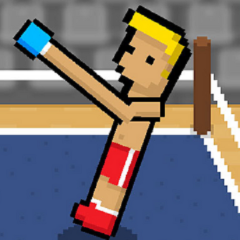





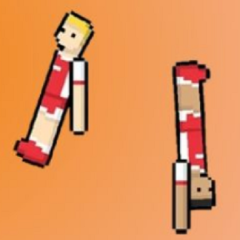




Volleyball Random is a simplified sports game that uses physics-based movement and a single-button control system. The player controls a team of two characters who act together, responding to the ball with limited direct input. Matches are short and structured around scoring points by sending the ball over the net while adapting to changing conditions.
Match Structure and Objective
Each match is played as a sequence of rounds where the goal is to reach a target score before the opponent. After every point, the environment or physics conditions may change, which affects how the next round plays out. This creates variation without altering the core rules.
There are no complex systems such as fouls or rotations. The structure remains focused on keeping the ball in play and reacting to its movement.
Control System and Input Logic
Volleyball Random uses a one-button input model. The player presses a key to trigger a jump and hit attempt for both controlled characters. Movement is not fully predictable due to the physics system, which means precise positioning is replaced by timing and repetition.
Typical gameplay actions include:
- Pressing a button to jump and strike the ball
- Timing input to block or return shots
- Adjusting rhythm based on ball speed
- Managing both characters with a single control
- Reacting to irregular movement patterns
These actions remain the same in every round.
Randomization and Game Variation
The game introduces changes after each point, which may affect gravity, player size, or ball behavior. These variations alter how the ball travels and how characters respond to input. As a result, the player cannot rely on a fixed strategy.
Adapting to new conditions becomes the main challenge. The player must quickly interpret how the current setup affects movement and adjust timing accordingly.
Replay and Skill Development
Volleyball Random is designed for repeated sessions, with each match providing different conditions. Since rounds are short, players can quickly restart and continue playing without delay.
Improvement is based on timing and adaptability. The player becomes more effective by recognizing patterns in movement and reacting faster to changes, rather than mastering a stable system of controls.